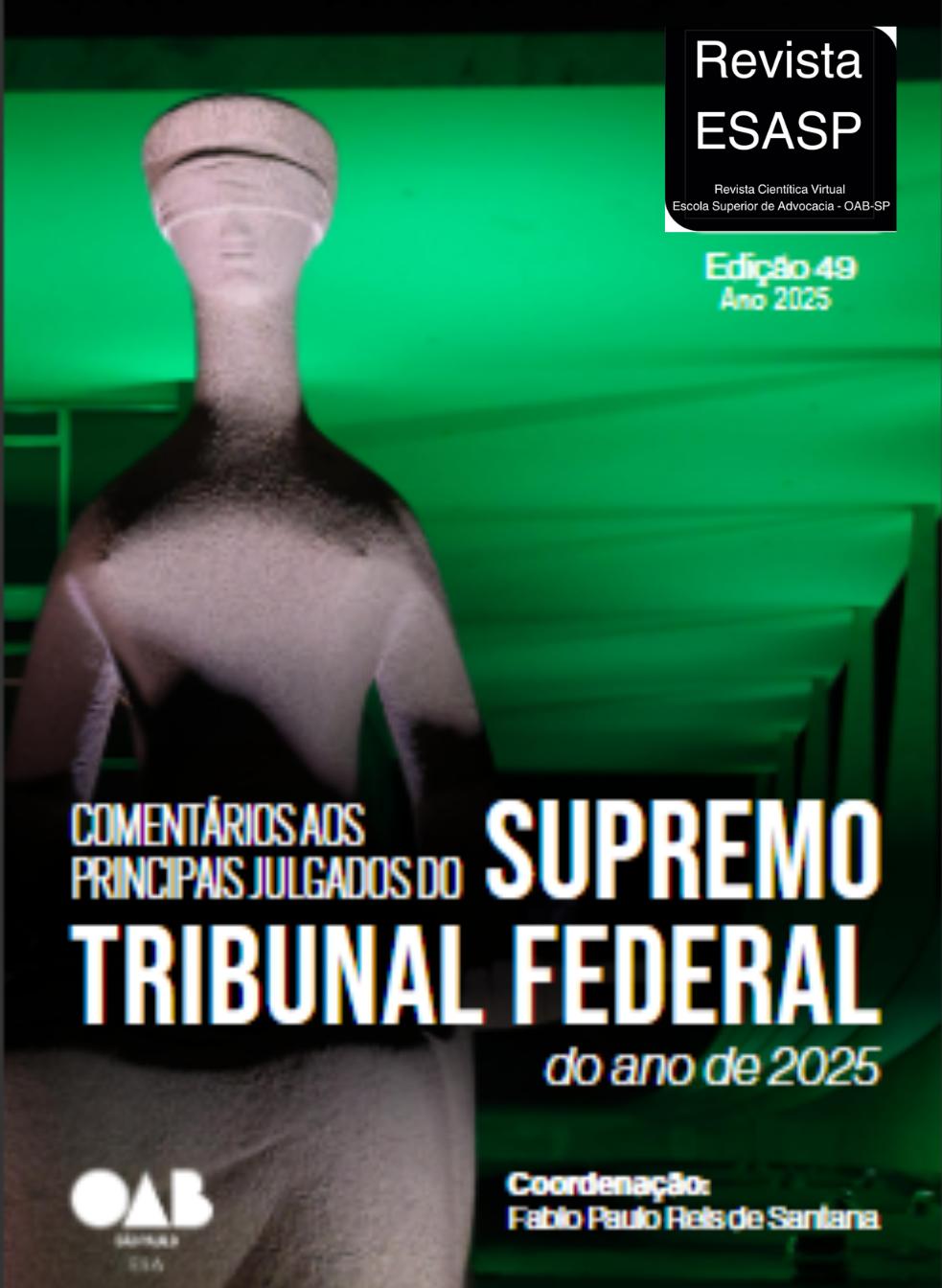
RE 970,343/PR (Theme 111 GA)
Unconstitutionality of offsetting court-ordered debts (EC 30/00)
Downloads
Abstract
The article analyzes the judgment of General Repercussion Theme 111 by the Brazilian Supreme Court (STF), which addressed the offsetting of tax debts with court-ordered debts (precatórios) of an alimony nature under the aegis of Constitutional Amendment 30/2000. The methodology focuses on examining the constitutionality of Art. 78 of the Transitional Constitutional Provisions Act (ADCT), which provided for the installment payment of court-ordered debts and granted tax-releasing power to outstanding installments. The authors highlight that the STF considered the appeal moot after declaring the unconstitutionality of said provision in ADIs 2,356/DF and 2,362/DF. The consolidated result in the thesis establishes that the regime of Art. 78 of the ADCT is unconstitutional, with the sole exception of installments made up to November 25, 2010. (Received: July 2025 | Accepted: October 2025)
Keywords
Data Availability Statement
Data are available within the body of the article
References
BRASIL. Supremo Tribunal Federal. Recurso Extraordinário 970.343/PR (Tema 111). Relator: Min. Cristiano Zanin. Plenário, trânsito em julgado em 17.06.2025.
BRASIL. Supremo Tribunal Federal. Ação Direta de Inconstitucionalidade 2.356/DF. Plenário, medida cautelar concedida em 25/11/2010.
BRASIL. Emenda Constitucional nº 30, de 13 de setembro de 2000. Altera disposições do Ato das Disposições Constitucionais Transitória
How to Cite
License
Copyright (c) 2025 Raphael Molina, Guilherme Molina, Juliana Rímoli Molina (Autor)

This work is licensed under a Creative Commons Attribution 4.0 International License.
This journal provides immediate open access to its content, based on the principle that making scientific knowledge freely available to the public supports a greater global exchange of knowledge.
All articles are published under the Creative Commons Attribution 4.0 International License (CC BY 4.0), which permits unrestricted use, distribution, and reproduction in any medium, provided that the original work is properly cited.