ARE 1,042,275/RJ (Theme 977 GA)
Police access to data from cell phones found at crime scenes
Downloads
Abstract
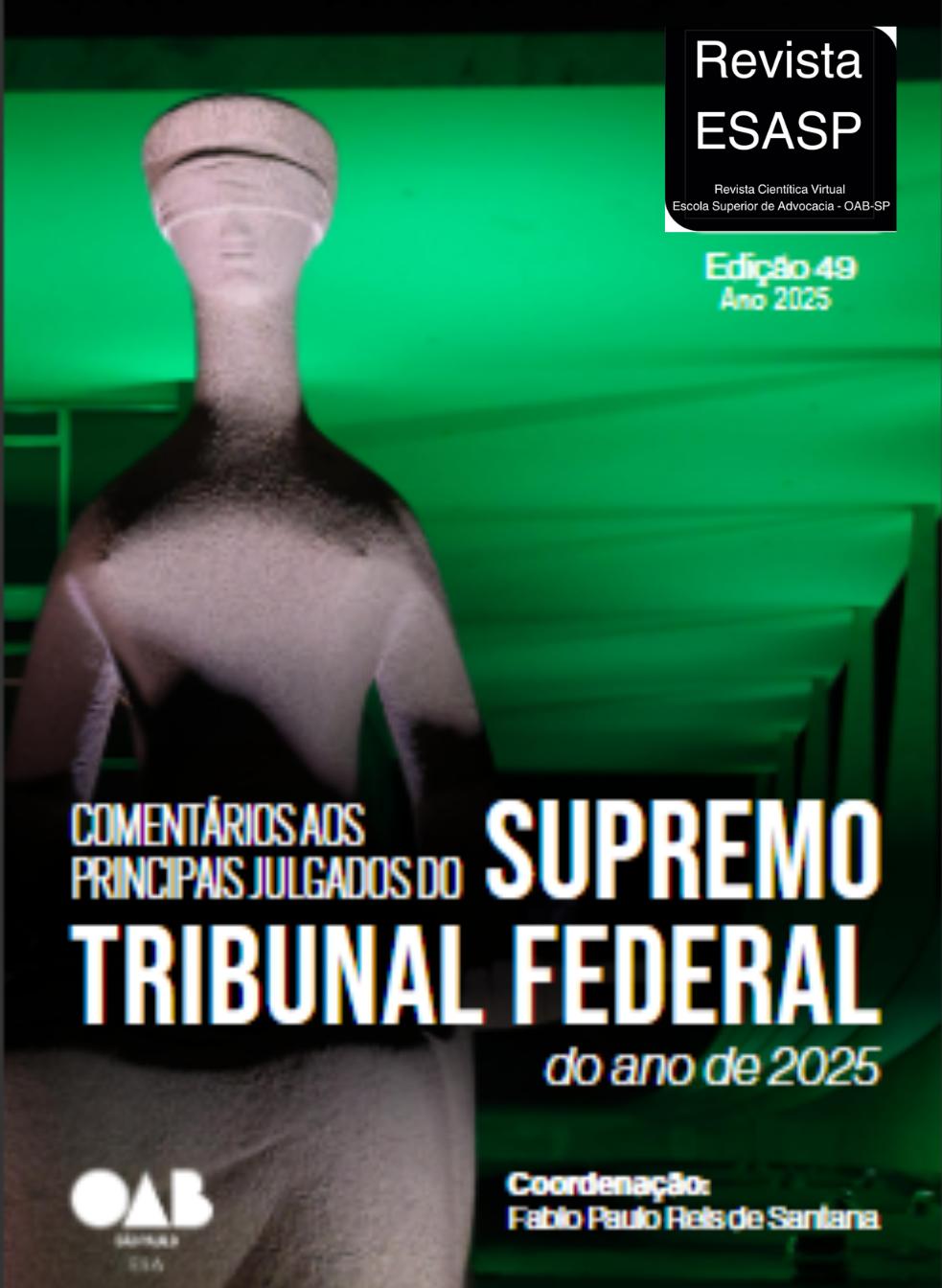
The article analyzes the understanding established by the Brazilian Supreme Court (STF) in General Repercussion Theme 977, which deals with the legality of police access to data from cell phone devices found fortuitously at a crime scene. The methodology consists of a legal commentary on a specific case of a robbery in which the abandonment of a cell phone allowed for the identification of the criminal without prior judicial authorization. The author highlights that, although the general rule requires consent or a court order to access data in cases of arrest or common seizure (Art. 6 of the Code of Criminal Procedure), the STF has established a "controlled exception" for fortuitous discovery. The result of the thesis permits superficial access (contact lists and call history) exclusively to identify authorship or ownership, preserving the core fundamental rights to privacy and data protection.
(Received: August 2025 | Accepted: October 2025)
Keywords
Data Availability Statement
Data are available within the body of the article.
References
BRASIL. Supremo Tribunal Federal. Recurso Extraordinário com Agravo 1.042.275/RJ (Tema 977). Relator: Min. Dias Toffoli. Plenário, publicado no DJe em 27.06.2025.
BRASIL. Supremo Tribunal Federal. Habeas Corpus n. 91.867/PA. Relator: Min. Gilmar Mendes. Segunda Turma, julgado em 24.04.2012.
BRASIL. Superior Tribunal de Justiça. Recurso Especial 1.782.386/RJ. Relator: Min. Joel Ilan Paciornik. Quinta Turma, DJe 18.12.2020.
How to Cite
License
Copyright (c) 2025 Maurício Schaun Jalil (Autor)

This work is licensed under a Creative Commons Attribution 4.0 International License.
This journal provides immediate open access to its content, based on the principle that making scientific knowledge freely available to the public supports a greater global exchange of knowledge.
All articles are published under the Creative Commons Attribution 4.0 International License (CC BY 4.0), which permits unrestricted use, distribution, and reproduction in any medium, provided that the original work is properly cited.